Recipe
Dorayaki, the Japanese pancakes to make at home and fill with a favorite gelato
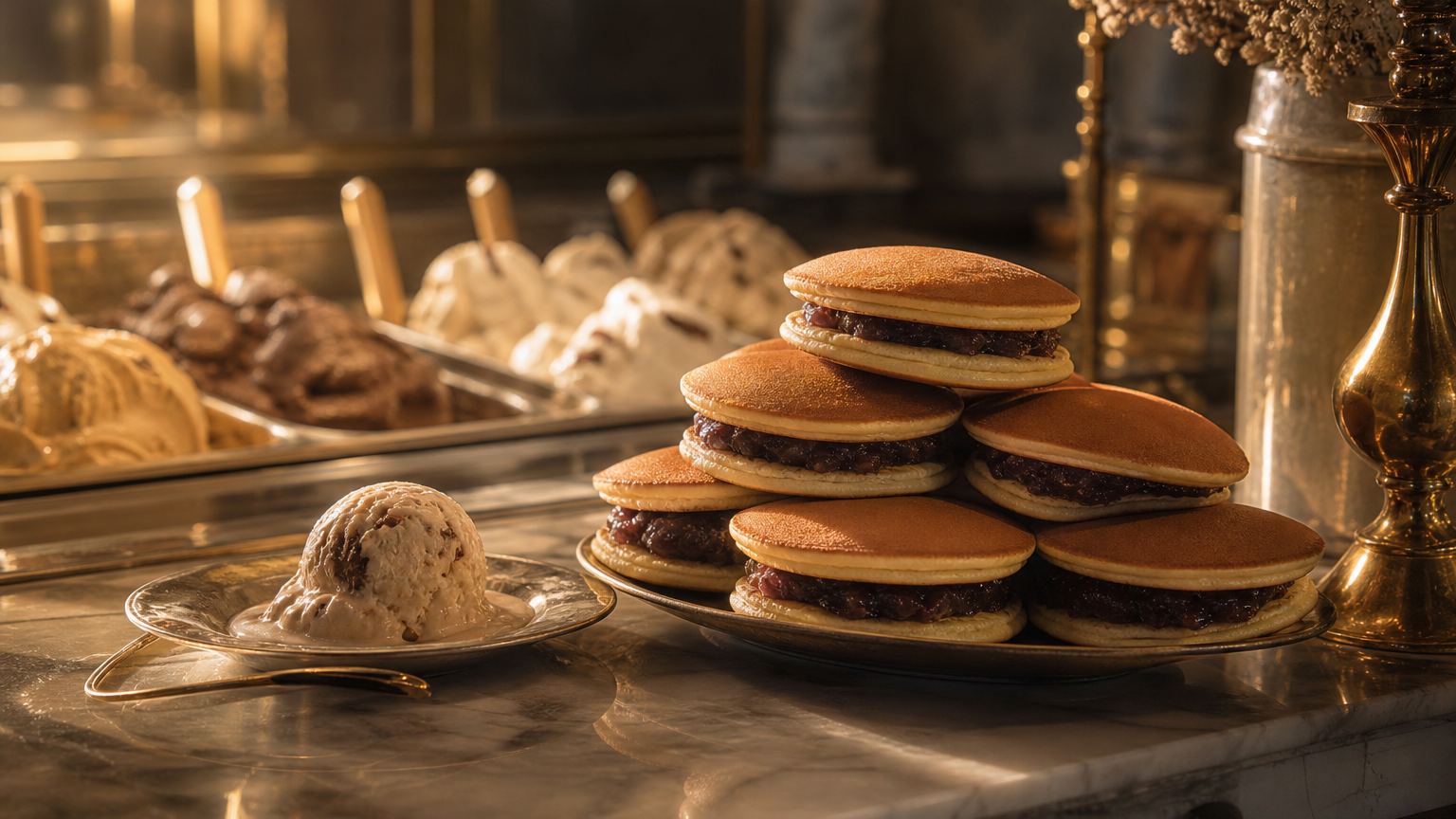
Anyone who was a child in the Eighties watched them disappear by the dozen into the paws of the robot cat Doraemon: dorayaki are the Japanese griddle cakes reminiscent of American pancakes, enjoyed in their homeland in pairs, filled like a sandwich. The recipe that follows is by blogger Mirco Di Marcello, who described it as a few minutes' work, perfect for a weekend snack.
From Japan to the Italian snack table
In Japan the canonical filling is anko, a sweet paste of azuki beans. In Italy, predictably, hazelnut spreads have taken over, though Mirco confessed to preferring them with berry or strawberry jam. The most indulgent version of all, however, is the one with gelato: two just-cooled dorayaki and a scoop of a favorite flavor in between, from chocolate to fior di latte. One practical detail makes them ideal to keep at home: they stay soft for days, so they can be made in advance and filled at the last moment.
Ingredients and method
For the batter: 2 eggs, 40 grams of sugar (brown, in Mirco's version), a teaspoon of honey, a teaspoon of baking powder, 2 tablespoons of water and 100 grams of 00 flour. The honey the blogger chose was an aromatic organic forest honey from the La Raia farm in Novi Ligure, a producer recognized in 2017 with the Ecofriendly award promoted by Vini Buoni d'Italia with Verallia and the Touring Club Italiano.
Whisk the eggs with the sugar, by hand or with a mixer, then incorporate the flour and the honey. The baking powder is dissolved in the two tablespoons of water and poured straight into the batter, which will fizz: at that point stir, cover and let it rest in the refrigerator for about half an hour. Cooking happens in a non-stick pan barely greased with oil, over medium-low heat: one tablespoon of batter per dorayaki, left to spread on its own. When the first small bubbles appear on the surface, flip with a spatula and let the other side turn golden. Once they are cool, all that remains is to fill them.
Which gelato to try them with
Dorayaki batter is sweet on its own, with the honey note up front: the flavors that work best are the ones that refuse to be covered. A firm dark chocolate, a savory pistachio or a classic egg-custard crema hold their own; those after something lighter can go for a fior di latte or a fruit flavor. For choosing the right raw material the usual rule applies: gelato from a good artisanal gelateria, like the ones listed among the gelaterie of Piedmont and of every other region, turns a fun snack into a small dessert to remember.
The secrets of even cooking
The mark of a well-made dorayaki is a golden, even surface with no blotches. The secret lies almost entirely in managing the pan: it should be greased with very little oil and then wiped with kitchen paper, because it is precisely the excess oil that creates the irregular dark patches. The heat must stay medium-low and constant, and it is worth sacrificing the first dorayaki as a test to calibrate the temperature, as with crêpes. The batter's rest in the refrigerator has a technical purpose too: it gives the flour time to hydrate and the baking powder to distribute itself, for a softer, more regular cake. To get identical discs, always use the same spoon or a small ladle, pouring the batter into the center and letting it spread on its own, without spreading it around. The honey, besides adding fragrance, retains moisture: it is what keeps them soft for days.
FAQ
Frequently asked questions about dorayaki
Why do dorayaki come out blotchy instead of golden?
The most common cause is excess oil in the pan: where the fat pools, the surface fries and darkens in patches. The solution is to grease the base and then wipe it with kitchen paper, leaving only an invisible film. Temperature matters too — it must stay medium-low and constant — as does the patience to flip the cake only when the small bubbles surface.
What is anko, the original Japanese filling?
It is a sweet preserve of red azuki beans, cooked at length with sugar, and it is the traditional dorayaki filling in Japan. Two main versions exist: the rustic one with the beans still recognizable and the smooth one, passed through a sieve. The flavor vaguely recalls chestnut and plum jam; in Italy it can be found in Asian grocery stores.
Can they be made in advance and frozen?
Yes, and it is one of their virtues: thanks to the honey they stay soft for several days at room temperature, sealed in an airtight container or wrapped in film. They can also be frozen already cooked, separated by sheets of baking paper, and thawed as needed in half an hour. The filling, though, should always be added at the last moment, otherwise the moisture softens the cakes too much.
How is the gelato kept from soaking the pancake?
The rules are three: completely cooled dorayaki, firm gelato straight from the freezer, and filling at the very last moment, just before serving. For extra protection, a thin layer of hazelnut spread or jam can be brushed on the inner side, acting as a barrier against moisture. The dessert should then be eaten immediately, like a little gelato sandwich that waits for no one.