How it works
How the AppGelato guide to artisanal gelaterie works
Where the data comes from, how it is verified, and how to use maps and listings to find the right counter.
The method
AppGelato maps Italy's artisanal gelaterie region by region: every listing gathers the address, a map and — where available from public sources — opening hours, contact details and the counter's founding year.
OpenStreetMap (© OSM contributors, ODbL license) and the guide's archive — never invented data.
The editorial team enriches and corrects the listings in cycles, cross-checking public sources and reader reports.
No gelateria can buy positions or reviews: there are no sponsored rankings.
Where the data comes from
The information comes from public, open sources — including OpenStreetMap (© OSM contributors, ODbL license) — and from the guide's archive. The editorial team verifies and integrates it over time: when a piece of data is not confirmed, it simply does not appear in the listing. No gelateria can buy positions or reviews: the guide hosts no paid rankings.
How to use the guide
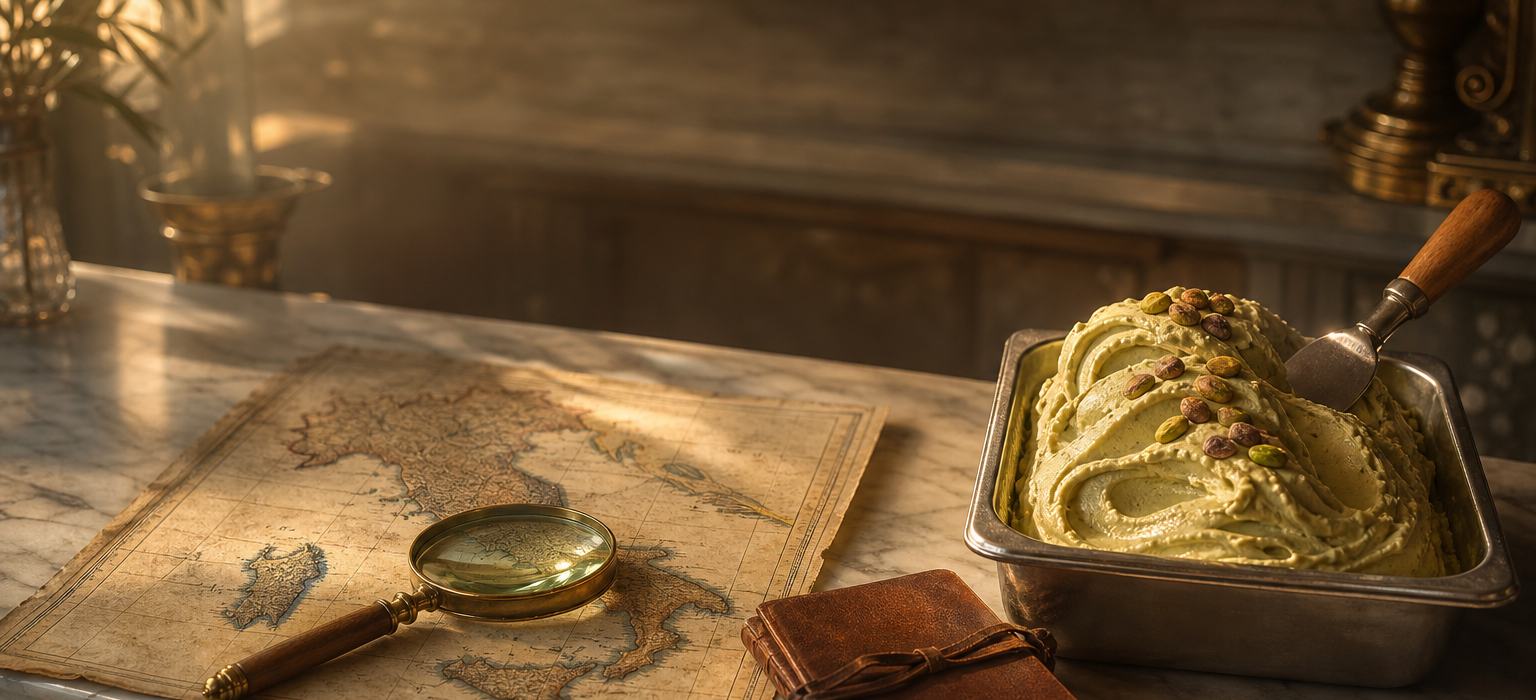
Start from the map of the regions, or from the page of the region you care about: the gelaterie are grouped town by town, with a Google map linked to every listing so you reach the counter without wrong turns. The regions' symbol flavors — from Sicilian pistachio to Piedmontese gianduia — work as a compass for the first taste.
What a listing contains
Every gelateria listing lines up what you need to get there: name and city, the address with an embedded Google map and — when the sources confirm them — opening hours, phone number, official website, social profiles and the counter's founding year. Many historic gelaterie carry the year right in their name, and it is the first clue of a display case that has crossed generations.
The regional pages add the context: the region's symbol flavor, the cities with the most counters, local traditions — from Sicilian pistachio to the tartufo of Pizzo — and the questions travellers chasing cones ask most.
The regions' symbol flavors
On AppGelato every region has a symbol flavor: pistachio for Sicily, gianduia for Piedmont, stracciatella for Lombardy, lemon for Campania, bergamot for Calabria, all the way to Sardinian mirto and Trentino's green apple. They are neither rankings nor judgments on individual counters: they are tasting compasses, the flavor with which each local tradition best introduces itself to a visitor. The regional pages tell where they come from and how to use them at the counter.
If something looks off
Hours and openings change often, especially in seasonal spots: before a long trip it is always worth checking directly with the gelateria. Reader reports are used to correct the listings at the following updates.
FAQ
Frequently asked questions about the guide
Can gelaterie pay to appear in the guide?
No. Listings are built from public sources and the guide’s archive: no position, listing or mention is for sale, and there are no sponsored rankings.
Why do some listings carry more information than others?
Because the guide reports only what the sources confirm: if an opening time or founding year cannot be verified, the listing leaves it out rather than inventing it. Listings grow richer with each update.
How are the regional symbol flavors chosen?
From tradition: pistachio for Sicily, gianduia for Piedmont, bergamot for Calabria. They are a tasting compass, not a judgment on individual gelaterie.
How often is the data updated?
The editorial team enriches and corrects the listings in periodic cycles, cross-checking public sources against reader reports. For the big decisions — a trip, a booking — a direct check is always worth it.