Artisanal gelaterie
Gelaterie in Lombardy: the guide to the best artisanal shops, city by city
Symbol flavor: stracciatella — 980 gelaterie, town by town, with maps and verified listings.
The guide
Milan alone is worth half a guide: no other city in this collection counts as many shops. Right behind come Brescia, Bergamo and Monza, then the provincial capitals on the lakes and those of the plain. Anyone looking for gelaterie in Lombardy has 992 cataloged addresses to work with, the highest number of any region on this site. On this page the editorial team has arranged the material in a practical order: first the cities where it pays to focus the search, then the flavor that best tells the story of the territory, stracciatella, and finally some concrete criteria for telling an artisanal workshop from an industrial counter. The full profiles of Lombardy's artisanal gelaterie, with addresses and neighborhoods, can be found on the pages dedicated to the individual cities.
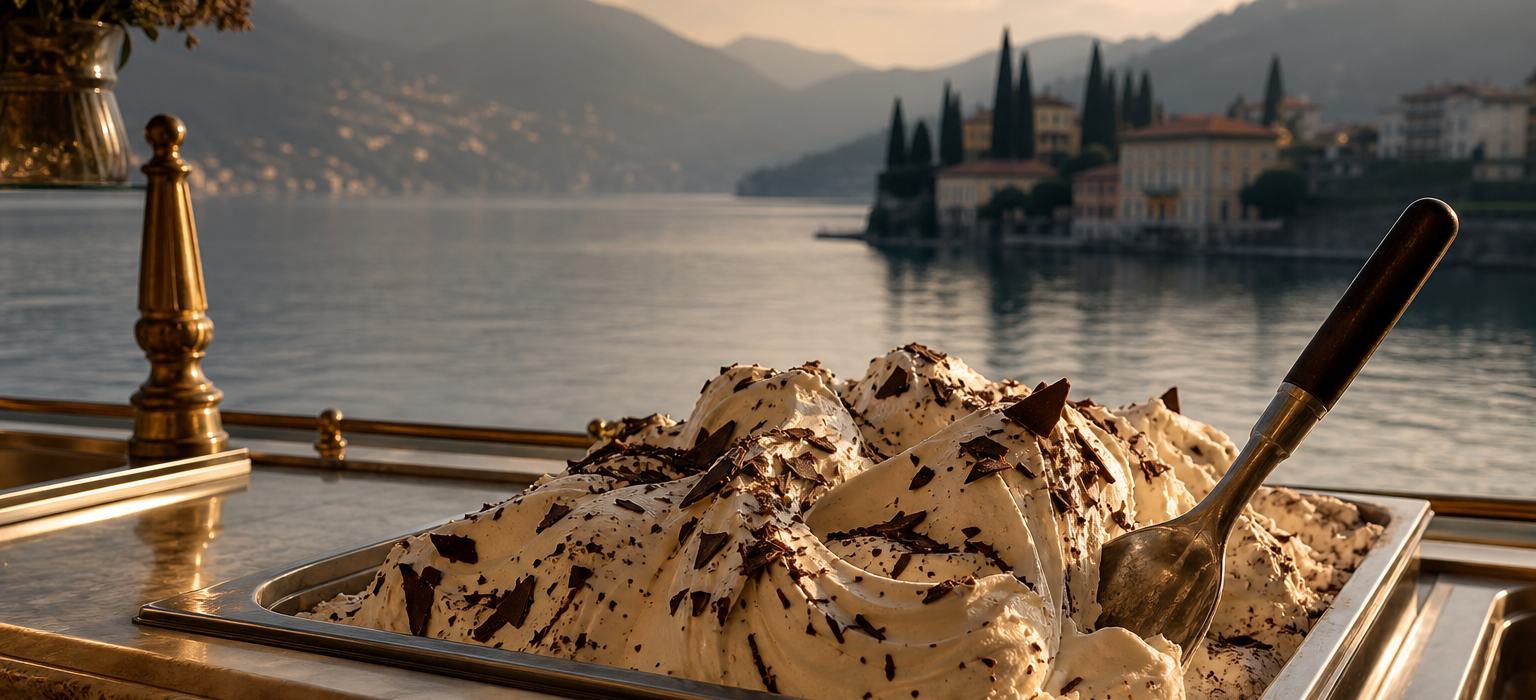
Italy's most imitated flavour was born in 1961 in a gelateria in Bergamo Alta, inspired by stracciatella soup: melted chocolate poured into fior di latte and "shredded" into flakes. The rest is counter history.
Como, Garda, Iseo, Maggiore, Lugano: the Lombard shores hold one of the region's highest densities of gelaterie, grown up alongside lakeside promenades and freshwater tourism.
Lombardy is the region with the most gelaterie recorded in this guide: from the Milanese neighbourhood shop to the historic counters of the provinces, a complete sampler of the trade.
Milan, Brescia and Bergamo: the capitals of Lombard gelato
Milan accounts for the largest share of the 992 cataloged Lombard gelaterie. The distribution follows the life of the city: many workshops sit along the Navigli canals and in the Porta Romana and Isola districts, where gelato accompanies the evening stroll, while the historic center mixes long-established names with recent openings. Visitors in Milan on business often find counters open until late in the evening, a habit less common in the rest of the region.
Brescia plays a different game: fewer addresses, but a high share of family-run workshops, concentrated between the historic center and the residential districts. Bergamo splits the scene between Città Alta, where gelato is eaten while walking along the Venetian walls, and Città Bassa, home to the workshops most frequented by locals. Bergamo has a special bond with the history of Italian gelato, told further down in the section on stracciatella. For anyone with a single day available, the triangle between these three cities remains the route with the highest density of artisanal counters.
Visitors in Milan on business often find counters open until late in the evening, a habit less common in the rest of the region
Where to find gelaterie in Lombardy, from the lakes to the plain
Outside the three main cities, the map of gelaterie in Lombardy follows two different geographies. The first is that of the lakes: Como and Varese run on seasonality, with counters that double their offering between spring and summer, when the lakefront fills with visitors. In Como, gelato is part of the ritual walk toward the funicular and the lakeside gardens; in Varese the scene is spread between the center and the villages on the lake of the same name. Off-season travelers will still find the workshops in the center open, with shorter menus and winter flavors such as chestnut and the cream-based classics.
The second geography is that of the plain. Monza benefits from its proximity to Milan and from the strolling route around the Arengario and the park, Pavia combines a university crowd with families, and Cremona guards an old confectionery tradition tied to torrone nougat, which makes the city an interesting stop for gelato seekers too. In all these cities the numbers are more modest, but the editorial team's selection favors precisely the artisanal gelaterie rooted in the territory.
In all these cities the numbers are more modest, but the editorial team's selection favors precisely the artisanal gelaterie rooted in the territory
Stracciatella, the flavor that tells the story of Bergamo
If one flavor has to represent the region in this guide, it is stracciatella. According to the most widely accepted account, the flavor was born in Bergamo in the early 1960s, when a gelato maker in the city had the idea of pouring melted chocolate over fior di latte (the plain sweet-milk base) as it churned, breaking it into irregular shards. The name comes from the stracciatella soup of Roman and central-Italian cooking, whose threads of egg in broth recall the pattern of the chocolate in the gelato.
Since then stracciatella has become the common property of every Italian counter, but in Bergamo and across Lombardy it retains a particular identity value. Recognizing a good stracciatella is also a quick test of a workshop's quality: the base should taste of fresh milk rather than industrial panna cotta, and the shards should be irregular, thin and crisp — the sign of chocolate poured by hand rather than pre-made chips added cold. It is worth ordering as the first taste when trying a new gelateria: if the stracciatella convinces, the whole display case usually does too.
It is worth ordering as the first taste when trying a new gelateria: if the stracciatella convinces, the whole display case usually does too
How this guide to Lombardy's artisanal gelaterie was made
The 992 Lombard addresses on this site come from public sources: chamber of commerce registers, the businesses' official sites and channels, and verifiable reports. The editorial team checks the data before publication and updates it periodically, removing businesses that have closed and correcting addresses and opening hours when they change. No gelateria pays to appear in the guide and no position is sponsored: the order in which businesses appear on the city pages follows editorial criteria, not commercial ones.
A few practical pointers for using the guide on the ground. In art cities and on the lakes, be wary of window displays with brightly colored mountains of gelato sitting in the sun: well-kept artisanal gelato sits low in the carapina (the deep steel tub), often covered. A short menu that changes with the seasons — strawberry in spring, chestnut in autumn — says far more than a hundred flavors that never change. And a bright-green pistachio, in Lombardy as anywhere else, deserves at least a question at the counter before buying.
A few practical pointers for using the guide on the ground
Beyond the Lombard border: Piedmont, Veneto and Emilia-Romagna
Lombardy borders territories with equally deep-rooted traditions of the frozen craft, and anyone who moves often between these regions can use the sister guides in the same way. To the west, Piedmont's gelaterie are the home of gianduia, the marriage of cocoa and hazelnut that in Turin is almost a religion. To the east, the gelaterie of Veneto tell another important story: from the Belluno valleys and from Zoldo, generations of gelato makers set out and carried the Italian cone across half of Europe. Heading south, Emilia-Romagna brings its great culture of milk and cream flavors to the table.
For those living in Lombardy, these borders are concrete opportunities: a day out on Lake Garda can start with a stracciatella in Brescia and end at a counter in Verona, and the train to Turin is worth taking just for the comparison between Lombard fior di latte and Piedmontese gianduia. The starting point, though, remains Milan, with the widest choice in the region.
To the west, Piedmont's gelaterie are the home of gianduia, the marriage of cocoa and hazelnut that in Turin is almost a religion
The listings
The gelaterie of Lombardy, town by town
Milano(111)
Show 103 more in Milano
Brescia(21)
Show 13 more in Brescia
Bergamo(15)
Monza(15)
Seregno(11)
Legnano(9)
Show 1 more in Legnano
Lecco(8)
Pavia(8)
Sirmione(8)
Como(7)
Varese(6)
Arese(5)
Mantova(5)
Gallarate(4)
Lissone(4)
Meda(4)
Caravaggio(3)
Chiavenna(3)
Iseo(3)
Parabiago(3)
Rho(3)
San Donato Milanese(3)
Treviglio(3)
Busto Arsizio(2)
Desenzano del Garda(2)
Garbagnate Milanese(2)
Lurate Caccivio(2)
Sesto Calende(2)
Sesto San Giovanni(2)
Somma Lombardo(2)
Toscolano Maderno(2)
Vimercate(2)
Abbadia Lariana(1)
Almè(1)
Appiano Gentile(1)
Azzano San Paolo(1)
Badalasco(1)
Bagnatica(1)
Baranzate(1)
Barlassina(1)
Bedizzole(1)
Belgioioso(1)
Besozzo(1)
Bovezzo(1)
Bovisio Masciago(1)
Brugherio(1)
Calusco d'Adda(1)
Canegrate(1)
Canzo(1)
Capriolo(1)
Cardano al Campo(1)
Casorate Sempione(1)
Cassago Brianza(1)
Cassinetta di Lugagnano(1)
Castelbelforte(1)
Castellanza(1)
Castello di Brianza(1)
Cavaria con Premezzo(1)
Cermenate(1)
Cernobbio(1)
Cernusco Lombardone(1)
Cerro Maggiore(1)
Cesana Brianza(1)
Chiari(1)
Chignolo Po(1)
Cittiglio(1)
Cogliate(1)
Cologno Monzese(1)
Cornate d'Adda(1)
Costa Volpino(1)
Cusano Milanino(1)
Darfo Boario Terme(1)
Desenzano(1)
Domaso(1)
Dosolo(1)
Endine Gaiano(1)
Gaggiano(1)
Gardone Riviera(1)
Gargnano(1)
Garlate(1)
Gavirate(1)
Germignaga(1)
Gorgonzola(1)
Gussago(1)
Laveno-Mombello(1)
Lentate sul Seveso(1)
Lierna(1)
Limbiate(1)
Limone sul Garda(1)
Lonate Pozzolo(1)
Lonato del Garda(1)
Lurago d'Erba(1)
Magenta(1)
Malnate(1)
Manerba del Garda(1)
Melegnano(1)
Menaggio(1)
Misinto(1)
Montichiari(1)
Montorfano(1)
Nerviano(1)
Nova Milanese(1)
Novate Milanese(1)
Olgiate Comasco(1)
Olgiate Olona(1)
Opera(1)
Orio al Serio(1)
Orzinuovi(1)
Paderno Dugnano(1)
Pero(1)
Peschiera Borromeo(1)
Polpenazze del Garda(1)
Ponte in Valtellina(1)
Ponte Nossa(1)
Ponteranica(1)
Romano di Lombardia(1)
Roncadelle(1)
Sabbioneta(1)
Sale Marasino(1)
San Fermo della Battaglia(1)
San Martino Siccomario(1)
San Pellegrino Terme(1)
San Rocco al Porto(1)
San Vittore Olona(1)
Sarezzo(1)
Segrate(1)
Sirtori(1)
Sotto il Monte Giovanni XXIII(1)
Torbole Casaglia(1)
Torre Boldone(1)
Tradate(1)
Tremezzina(1)
Trescore Balneario(1)
Triuggio(1)
Vailate(1)
Vaprio d'Adda(1)
Varedo(1)
Varenna(1)
Vedano al Lambro(1)
Venegono Superiore(1)
Verano Brianza(1)
Vergiate(1)
Verretto(1)
Vignate(1)
Villa Carcina(1)
Villa Guardia(1)
Villanuova sul Clisi(1)
Villasanta(1)
Vimodrone(1)
Volta Mantovana(1)
Other towns(500)
Show 492 more in Other towns
FAQ
Gelato in Lombardy: quick answers
How many artisanal gelaterie are there in Lombardy?
The guide catalogs 980 gelaterie in Lombardy, the highest number of any region on the site. The largest share is concentrated in Milan, followed by Brescia, Bergamo and Monza; Como, Pavia, Varese and Cremona complete the picture, together with the smaller towns of the plain and the lakes.
What is the typical flavor of Lombard gelaterie?
Stracciatella is the flavor that best represents the region: according to the most widely accepted account, it was born in Bergamo in the early 1960s, with melted chocolate poured over fior di latte and broken into shards. It also remains an excellent test for judging the quality of an artisanal workshop.
Which Lombard city has the most gelaterie?
Milan, by a wide margin: the city accounts for the largest share of the region's addresses, spread between the historic center, the Navigli, Porta Romana and Isola. Many Milanese counters stay open until late in the evening, a useful habit for anyone visiting the city outside the warm season as well.
Are the gelaterie on lakes Como and Varese open all year round?
Not all of them. On the lakefronts many businesses follow the tourist season and cut their hours or close between autumn and winter. The workshops in the historic centers of Como and Varese generally stay open all year, with shorter menus and winter flavors such as the cream-based classics and chestnut.
How do you recognize an artisanal gelateria in Milan?
The most reliable clues are a short, seasonal flavor menu, natural colors and gelato kept low in the carapine (the deep steel tubs), ideally covered. Colorful mountains on display in the window almost always point to industrial mixes. The ideal time for the test is spring, when real strawberry joins the menu.