Ingredients
Vanilla and vanillin: what the real difference is, explained by a master gelato maker
Among the best-known flavorings in the world of gelato are vanilla and vanillin, and confusing the two is a classic. Bringing clarity, in a piece taken up by this column, was master gelato maker Giorgio Zanatta, a consultant for gelaterie, who described vanillin for what it is: a powdered compound of small flakes and white or pale-yellow crystals, with a characteristic smell and taste, that almost everyone has used at least once in home baking.
An identical molecule, a different label
The central point of Zanatta's explanation deserves underlining: synthetic vanillin is chemically identical to the vanillin contained in the vanilla bean. Its main “flaw”, from a commercial standpoint, is another: it cannot claim the adjective natural. Dismissing it simply as a chemical product, as often happens, is therefore hasty. The real difference from vanilla beans lies not in the single molecule but in complexity: a bean contains hundreds of aromatic components that vanillin alone cannot replicate.
Where synthetic vanillin comes from
The compound's industrial history is longer than one might imagine. The first laboratory synthesis dates back to 1874, the work of two German chemists who started from a substance found in pine resin. The method, economically unattractive, was replaced a few years later by a route based on eugenol, a molecule extracted from cloves; in the last century a process starting from wood cellulose was added. All these routes, Zanatta recalled, share one limitation: they require several recrystallization stages before yielding a vanillin pure enough for food use. Research has also produced ethylvanillin, three or four times more potent as a flavoring, and has attempted the route of cell cultures from the vanilla plant to obtain a “natural” vanillin, so far without economically viable results.
What to look for at the gelateria
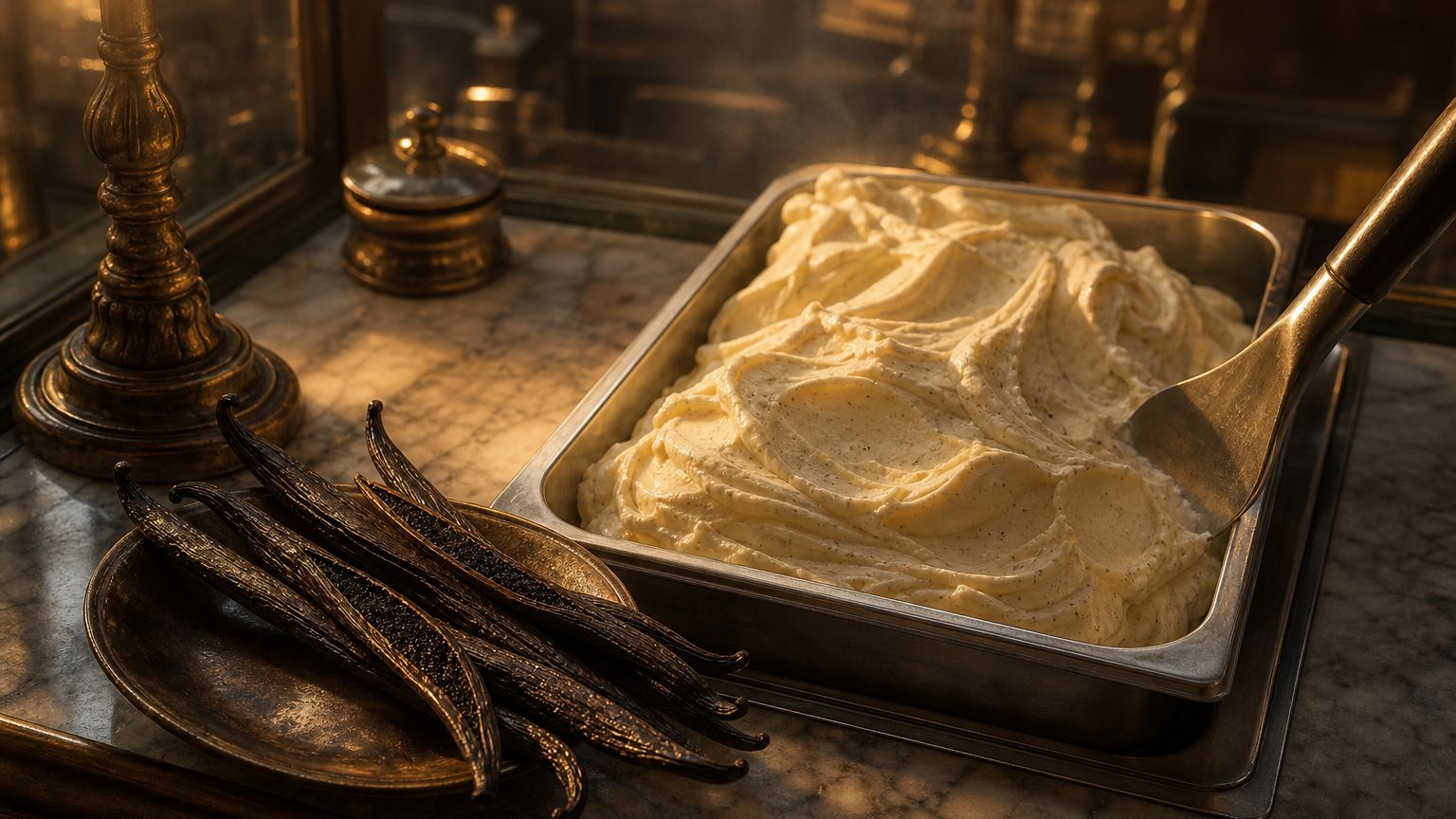
For anyone standing in front of the display, the practical lesson is simple. A vanilla gelato made with beans is often recognizable by the black specks of the seeds and by a warm, complex fragrance; a flavor built on vanillin alone tends to be flatter and more insistent. No scandal, but it is fair to know what is being tasted. It remains, in any case, one of the relatively more modest cream flavors at the counter: the curious can compare its numbers with the others in the guide to the calories in artisanal gelato.
Bourbon, Tahiti and the rest: the world of vanilla beans
Anyone moving from vanillin to real vanilla discovers that not even the beans are all alike. The most widespread is the Bourbon variety, grown above all in Madagascar and the nearby islands: the name comes from the old name of Réunion, the Île Bourbon, and signals a warm, sweet, creamy profile — the one everyone instinctively associates with vanilla. The Tahitensis variety, from Polynesia, is more floral and aromatic, with notes reminiscent of anise; Mexico, the original homeland of the orchid the bean comes from, produces spicy, deep vanillas. The high price has a precise explanation: outside Mexico the natural pollinating insect is missing, and every single flower is pollinated by hand, within a usable window of a few hours. Months of curing and refining of the beans follow. Few raw materials in the world demand as much manual labor, and this is what makes natural vanilla one of the most expensive spices of all.
FAQ
Frequently asked questions about vanilla and vanillin
Is vanillin harmful to health?
No: it is an authorized flavoring considered safe at food-use doses, and it is chemically identical to the vanillin found in the natural bean. The difference from real vanilla is not about safety but about aromatic complexity: the bean contains hundreds of components that the single molecule cannot replicate. It is a matter of richness of fragrance, not of risk for the consumer.
Why does natural vanilla cost so much?
Because it is one of the most labor-intensive crops in the world: outside Mexico every flower must be pollinated by hand within a window of a few hours, and the harvested beans require months of curing and refining before developing their aroma. Add to this harvests concentrated in a few areas, Madagascar above all, exposed to cyclones and market swings that push prices up further.
How can a gelato made with real vanilla be recognized?
The most reliable clues are the black specks of the seeds scattered through the mass and a warm, complex fragrance that keeps evolving in the mouth. The color should be a natural ivory: a bright, uniform yellow suggests colorants rather than yolks or beans. A flavor that tastes generically sweet, intense but flat, almost always tells of a recipe built on vanillin alone.
What exactly does Bourbon vanilla mean?
It has nothing to do with whiskey: Bourbon was the colonial name of the island of Réunion, in the Indian Ocean, and today it designates vanilla of the planifolia variety grown in that geographical area, Madagascar and its neighboring islands included. It is the most classic aromatic profile, warm and creamy, the one most people recognize as the taste of vanilla par excellence.