Recipe
Molten chocolate lava cake: the step-by-step recipe and the fior di latte gelato pairing
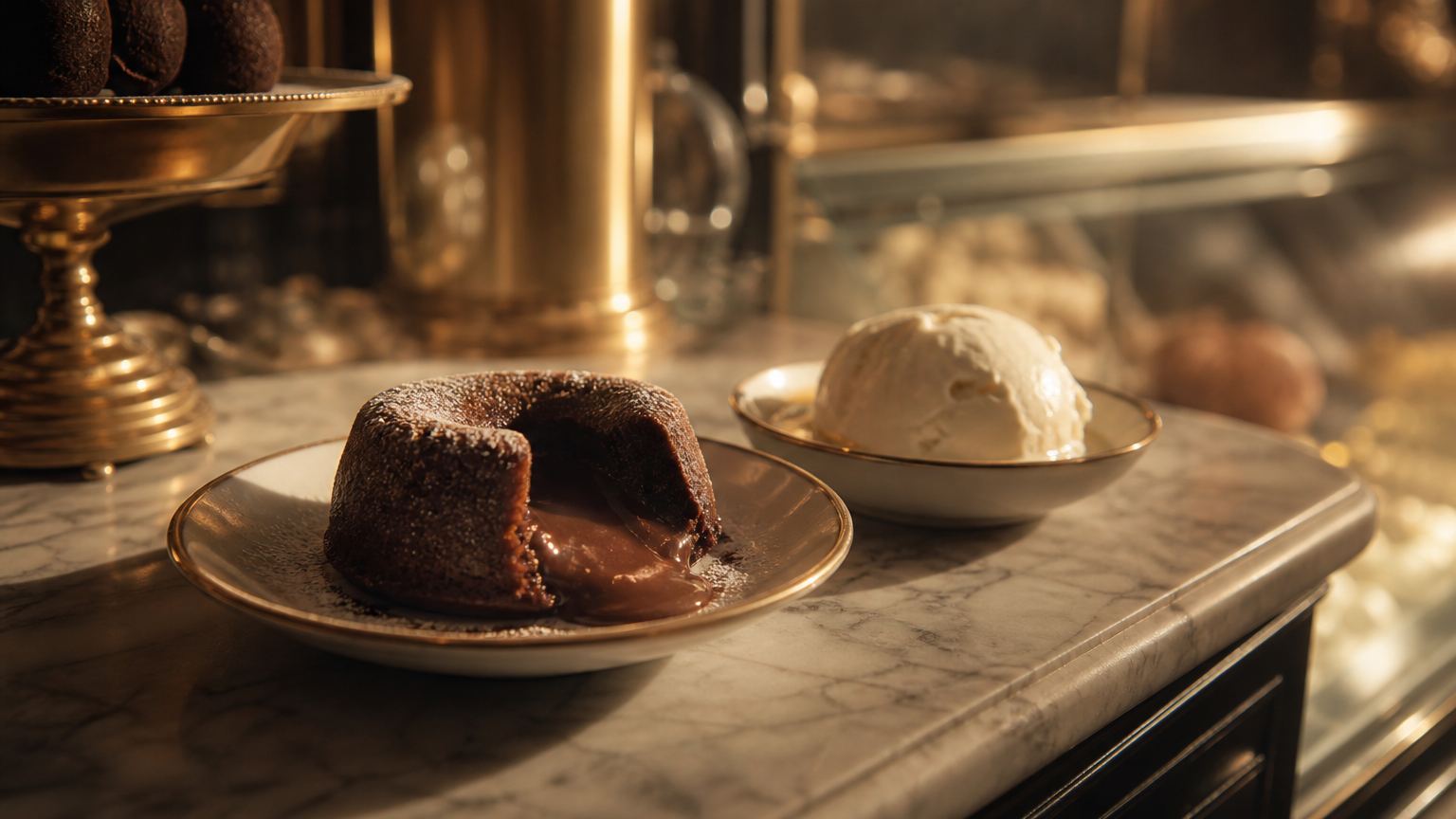
The molten chocolate lava cake is the restaurant dessert that scares home cooks the most and deserves it the least: six ingredients, one bowl, and a bake decided in a matter of minutes. It is also gelato's ideal companion: when the warm chocolate core meets a cold scoop of fior di latte, the contrast makes the dessert.
Here is the chocolate lava cake recipe with precise amounts and timings, the trick that makes the molten center practically foolproof, and how to serve it with gelato without one ruining the other.
The ingredients for 4 lava cakes
The classic amounts, for 4 aluminium molds or 8-centimetre cocottes:
- 200 g dark chocolate (at least 60% cocoa)
- 100 g butter
- 2 whole eggs plus 2 yolks
- 90 g sugar
- 40 g sifted 00 flour
- a pinch of salt, plus butter and cocoa for the molds
The chocolate is the ingredient that decides the result: with a good-quality dark couverture the center stays glossy and fluid, with a mediocre chocolate it turns dull and grainy. The flour is deliberately minimal: a lava cake is not a muffin — it should barely hold itself together.
The chocolate lava cake recipe, step by step
First: melt the chocolate and butter together, in a bain-marie or in the microwave at low power, and let the mixture cool slightly. If it is too hot it will cook the eggs on contact.
Second: whisk the eggs, yolks and sugar until the mixture holds a ribbon — lift the whisk and the falling trail should stay visible for a few seconds. The air whipped in here is what gives the thin crust on top.
Third: fold the melted chocolate into the eggs with a spatula, then the sifted flour and the salt, mixing as little as possible. Pour into the molds, buttered and dusted with cocoa, filling them three quarters full.
Fourth: bake in a preheated conventional oven at 200 °C for 10-12 minutes. The edges should be set, the center just wobbly. Take them out, wait exactly one minute, turn out onto the plate. The first lava cake sacrificed to calibrating one's own oven is a respectable tradition: from the second one onward, the center will flow.
The freezer trick for a perfect molten center
The restaurant secret is that the cake waits in the freezer, not in the oven. The filled molds are frozen raw, even days ahead; they go into the oven straight from frozen, extending the bake to 14-16 minutes.
The advantage is twofold. The center, starting ice-cold, lags behind the edges: the molten core becomes a physical certainty instead of a gamble over seconds. And the dessert gets made when things are calm, ready to be baked while the guests finish their main course.
An indulgent variation on the same principle: a square of chocolate pushed into the middle of each mold before baking. At the first cut, the flow is guaranteed even if the oven overshot by a minute.
Why fior di latte gelato is the right pairing (and how to serve it)
The lava cake is chocolate in a nearly pure state: warm, intense, single-note by vocation. It needs a cold, milky, clean counterpoint — which is exactly the job of fior di latte, the flavor every serious artisanal gelateria treats as its calling card. No eggs, no flavorings: just milk, cream and sugar, with that fresh finish the warm chocolate lights up.
How to serve it without a mess: the cake in the center of the plate just turned out, the scoop of gelato beside it and not on top, ideally resting on a spoonful of chopped nuts or a layer of crumble to act as a raft. Gelato placed directly on the warm dessert slides off and drowns within thirty seconds.
The reverse also holds: anyone starting from the gelato can consider the lava cake the most serious way to elevate a tub of fior di latte bought from a trusted gelateria — the guide's regional pages, from Piedmont to Campania, help find one.
Which chocolate to use: the percentage changes everything
The recipe works with any dark chocolate, but the result is not the same and it is worth choosing on purpose. A 55-60 per cent gives a sweet, rounded tortino that pleases everyone and forgives an extra minute in the oven, because the sugar holds moisture. A 70 per cent gives a more fluid centre and a sharper contrast with the gelato, but it is less forgiving: two minutes too many and the middle dries out.
Above 75 per cent the arithmetic really shifts. Cocoa butter goes up, sugar goes down, and the batter tends to come out sandy rather than silky: if you want to work with a very high percentage, add a spoonful of sugar to the base recipe rather than cutting it. Milk chocolate, on the other hand, cannot carry the role: it melts too sweet and the centre stays liquid even when fully baked. For this tortino, 70 per cent dark remains the choice that gives the best contrast with fior di latte, and it is the one we would point you to if you are buying a bar specially.
Moulds and ovens: why the same recipe changes from kitchen to kitchen
Two readers can follow identical steps and get opposite results, and the cause is nearly always one of these two. The mould: an 8 cm ceramic ramekin stores heat and keeps cooking the tortino after it leaves the oven, so it has to come out a minute early; a metal ring transfers fast and stops immediately, and tolerates a few extra seconds. Between the two, the gap reaches a full two minutes on the same recipe.
The oven is the other half. The temperature on the dial and the real temperature in the cavity often differ by 10-20 °C, and across a seven-minute bake that drift is the whole difference between a molten centre and a chocolate cake. An oven thermometer costing a few euros settles the question for good. Fan mode, meanwhile, dries the edges before the centre is ready: if your oven only has that setting, drop 10 °C and take off half a minute.
Variations that actually work
The lava cake forgives few liberties, but some it rewards. With milk chocolate the sugar needs cutting to 60 grams, or the dessert grows tiring by the third spoonful. The pistachio version — pistachio cream in the center, like the chocolate square in the trick above — is the best loved after the original, and it gets along with fior di latte just as well as dark chocolate does.
Those who want to stay classic can play with the gelato instead of the batter: a scoop of egg-custard crema for a rounder pairing, a raspberry sorbet for acidic contrast, a stracciatella for cold chocolate inside warm chocolate. The only real mistake is a flavor that is too strong: an intense pistachio or hazelnut covers the molten center instead of lifting it.
FAQ
Molten lava cake: common problems and fixes
Why didn't the molten center come out?
Almost always because of one minute too many in the oven or molds that are too wide: with more surface area the center cooks sooner. The rule of set edges and a wobbly center applies, and the freezing trick makes the result far more predictable.
Can the lava cakes be prepared in advance?
Yes, and it is the best method: the raw filled molds keep in the freezer even for a few weeks. Bake straight from frozen at 200 °C for 14-16 minutes, without thawing.
Which gelato goes with a lava cake besides fior di latte?
Crema for a rounder result, raspberry sorbet for acidic contrast, stracciatella to stay on the chocolate theme. Avoid dominant flavors like intense pistachio or hazelnut, which cover the molten center.
Can a microwave be used for the lava cake?
A microwave cooks from the inside: the molten center, which depends on a middle less cooked than the edges, becomes nearly impossible. A traditional conventional oven is better, even a small one, with the right molds.
What chocolate percentage works best for the tortino?
70 per cent gives the most fluid centre and the best contrast with fior di latte. 55-60 per cent is sweeter and forgives an extra minute in the oven. Above 75 per cent, add a spoonful of sugar or the batter turns sandy. Milk chocolate cannot carry the role.
Why does the tortino turn out differently in different ovens?
Because of the mould and the real temperature. Ceramic stores heat and keeps cooking outside the oven (take it out a minute early); metal stops immediately. And dials are often 10-20 °C off: across a seven-minute bake, that is the whole difference between a molten centre and a firm cake.
A scoop of gelato or a spooned cream alongside the tortino?
The scoop, for a physical reason: gelato at -12 °C holds the temperature contrast for as long as it takes to finish the tortino, while a cream at fridge temperature loses it after two spoonfuls. Set it beside the tortino, not on top, or the heat of the centre melts it in thirty seconds and the plate turns into a sauce. If the tortino has to wait a few minutes on the table, serve the gelato separately in a chilled cup.
How many calories are in a lava cake with gelato?
A classic single-mold lava cake with a scoop of fior di latte is an occasion dessert, not an everyday snack: anyone who wants the gelato numbers will find them in the guide to the calories in artisanal gelato.