Gelato stories
Verona and the East: Gelateria Savoia and the Sun That Comes Into the Window
In Verona, gelato has a precise geography, made of shop signs the Veronese hand down the way they hand down the shortcuts of the city center. Among these names is Gelateria Savoia, which this column had written about by weaving together two apparently distant threads: the history of the city, with its old trade ties toward the East, and the sun, which is at once gelato's best ally and its worst enemy.
A city of trade and spices
The link between Verona and the East is no fancy: for centuries the city was a hub of commerce between the plains and the Alpine passes, and under the Venetian Republic it saw spices, sugar and nuts pass through on their way to the northern markets. These are exactly the ingredients that would make the fortune of Italian gelato making: cinnamon, candied citrus, pistachios and almonds arrived from the East long before anyone thought of churning them. The historic gelaterie of the Veneto cities work within this inheritance, often without even claiming it: one glance along a display case is enough to rediscover, flavor after flavor, the old spice route. A name like Savoia, moreover, belongs to that generation of twentieth-century shop signs that chose stately titles to lend prestige to the trade, back when opening a gelateria was a family investment and the shop had to look like a small café of standing.
The sun, the gelato maker's ally and adversary
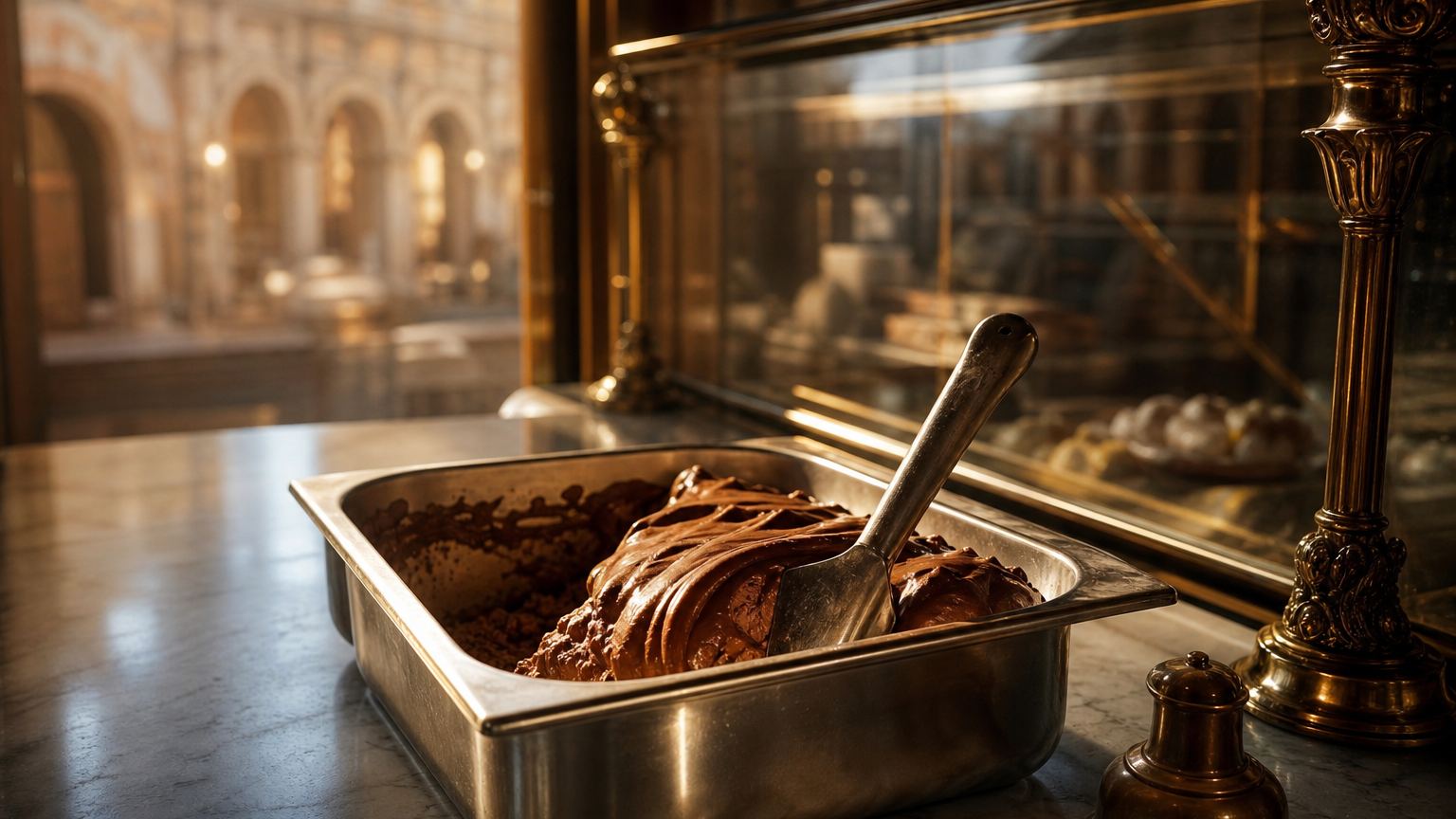
The other protagonist of the story is the sun, and every gelato maker knows the relationship with it is ambivalent. It is the sun that fills the squares and forms the lines in front of the counter, from Piazza Bra to the shopping streets; and it is also the sun that is the product's first adversary, since gelato fears heat and light more than anything else. You can spot the good gelaterie by this too: shielded display cases, closed carapine, gelato churned several times a day in the peak months. For anyone strolling through Verona on a summer evening — perhaps after the opera at the Arena or a walk along the Adige — the cone remains the most natural finale to the day: bought a few steps from Piazza delle Erbe and enjoyed while watching the pink marble catch fire in the sunset. The page dedicated to the gelaterie of Veneto collects the region's addresses, for anyone wanting to extend the itinerary beyond the Scaliger walls.
The spice route in the display case
Gelato's eastern inheritance is not just a matter of trade history: it can still be tasted today, flavor by flavor. Cinnamon, which reached Europe precisely through the Venetian trade, remains a winter classic of the Veneto gelaterie, often paired with apples or chocolate; ginger has enjoyed a second youth in contemporary display cases, as a sorbet or together with lemon; cardamom perfumes the Nordic- and Middle Eastern-inspired creams. Candied citrus, another historic cargo of the Venetian Republic's ships, survives in traditional flavors such as crema veneziana. The latest wave from the East is Japanese matcha tea, now a permanent presence at the counters of the art cities. Technically, spices demand a steady hand: they are dosed by infusion in warm milk, so they release their aromas without the sharp notes of the powder, and they must perfume without ever burning the palate. A balance as old as the routes that carried them here.
FAQ
Frequently asked questions about gelato, spices and storage
Which gelato flavors have eastern origins?
More than you might think: cinnamon, candied citrus and the spiced creams descend directly from the goods that reached Europe along the eastern routes, often precisely through the Venetian ports. Pistachios and almonds, pillars of gelato making, also have Middle Eastern roots. Today's display cases add ginger, cardamom and matcha tea, the latest arrivals in a centuries-long story of exchange.
Why is the sun a problem for gelato?
Heat and direct light are the two enemies of gelato's structure: they melt and recrystallize the surface, which turns gummy or grainy, and they degrade the more delicate aromas. That is why careful gelaterie protect the product with shielded display cases or closed carapine and churn it several times a day in the peak months, rather than leaving the tubs exposed for hours.
How can you tell if a gelato has been stored well?
The signs show before the first taste: low tubs or covered carapine instead of mountains exposed to the light, natural colors, a smooth surface without ice crystals or glossy films. On the palate, a badly stored gelato feels grainy or gummy, the sign of repeated melting and refreezing. Turnover counts too: a counter that empties and is refilled through the day is a counter working fresh.
What is the best moment for a gelato in Verona?
A summer evening remains unbeatable: after a walk along the Adige or a performance at the Arena, the cone accompanies the stroll home between Piazza Bra and Piazza delle Erbe, as the sunset lights up the pink marble of the center. Anyone who prefers calm can aim for an afternoon in the shoulder seasons, when the shopping streets empty out and there is no line at the counters.