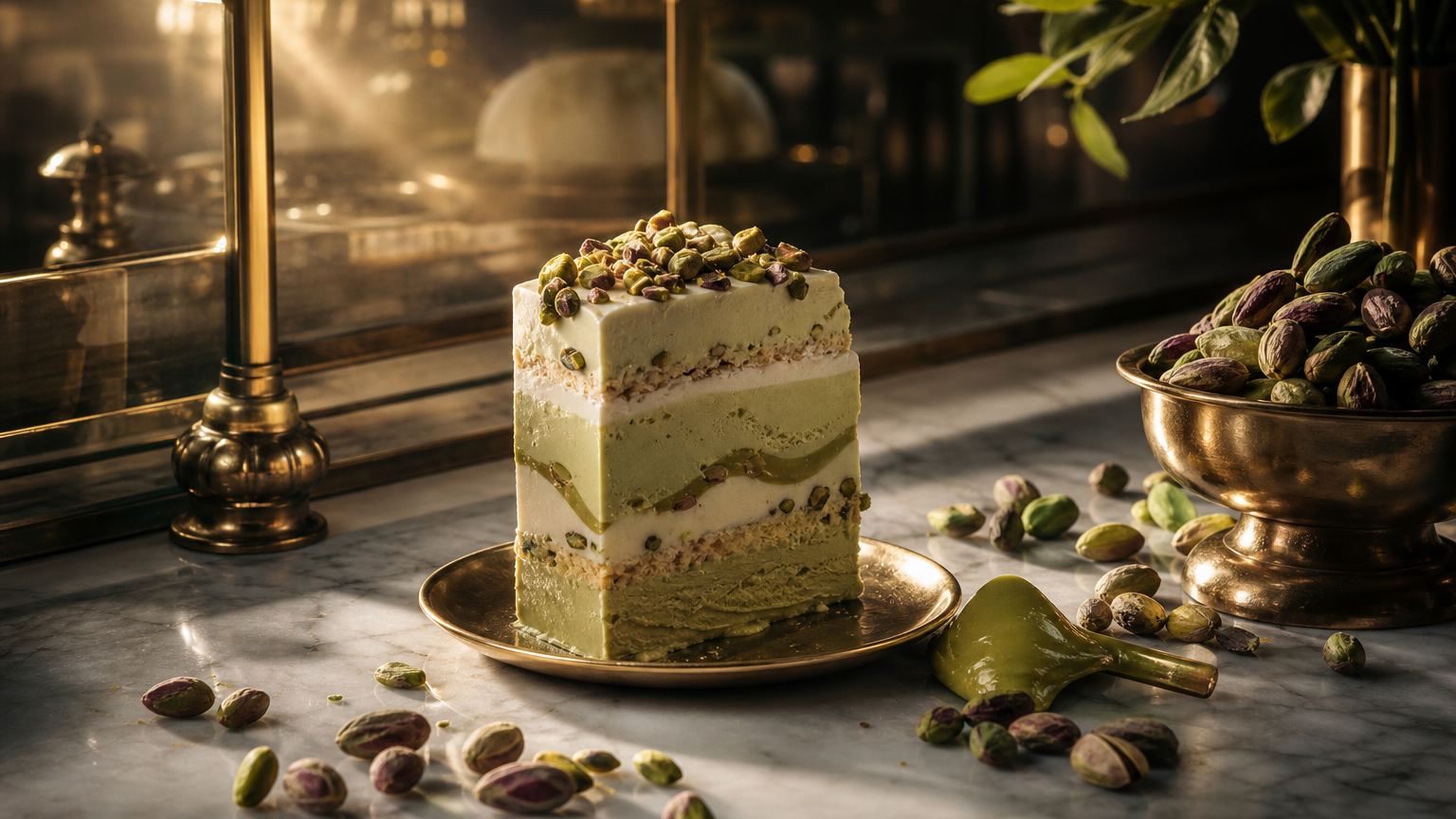
In the gelateria
The pistachio cremino: a layered specialty as told by a gelateria in Palermo
Some counter creations describe themselves, layer by layer. The pistachio cremino featured in this column came from Gelateria Azzurra on via Messina Marine, in Palermo, and its construction was a small manifesto of Sicilian indulgence: pralined pistachios with wafer and hazelnut cream inside, a layer of white chocolate to follow and, to finish, spreadable pistachio cream topped with chopped pistachios.
What a cremino is, and why it wins people over
The cremino began as a chocolate-shop format, a small layered block, and in the gelateria the idea evolved into cold specialties built on the same logic: stacked levels cut together by the spoon, so that every bite contains the whole sequence. In the Palermo version the sequence is designed for the palate of anyone who loves pistachio without half measures: the pralined part brings crunch and roastiness, the wafer lightens, the white chocolate adds a milky sweetness that acts as a bridge, and the pistachio topping with chopped nuts brings everything back to the opening theme. A round trip built around a single ingredient.
The format also has a practical advantage gelaterie know well: it can be prepared in advance, it keeps better than gelato in a carapina and it travels home without drama. It is the dessert to buy for dinner with friends when tiramisù has grown stale, or to allow oneself at the counter when a cone seems too little.
Pistachio, the pride of Sicily
That such a creation comes from Palermo is no surprise. Sicily is the homeland of Italian pistachio, with Bronte as its emblematic name, and the island's gelaterie handle this nut with a familiarity that is rare elsewhere: it appears in gelato, chopped, in cream, in brioche fillings and indeed in layered specialties like the cremino. Visitors to the island are spoiled for choice: the page dedicated to the gelaterie of Sicily is the starting point for getting oriented. The practical advice remains the usual one: where the pistachio is the real thing, the color is an intense, natural green, never garish, and the taste is roasted rather than sweet. A cremino built on that foundation needs no further introduction.
Building the layers, an exercise in patience
Behind the apparent simplicity of a cremino lies a precise technique, the same one used in the chocolate-making tradition the format comes from. Each layer must set before the next arrives, otherwise the levels blend and the cut loses its geometry: between one pour and the next the dessert goes into a blast chiller or freezer, and the timeline stretches. Thicknesses need calibrating too, because under the spoon all the layers must yield together: a chocolate layer that is too thick shatters, one that is too thin disappears on the palate. The wafer, besides lightening, works as a barrier against moisture, preserving the crunch that plays counterpoint to the creams. It is the kind of specialty that rewards orderly, patient workshops where haste never enters: that is why a well-made cremino, with clean, regular layers at the cut, says a great deal about the hand that built it.
FAQ
Frequently asked questions about the pistachio cremino
What is the difference between a chocolate-shop cremino and a gelateria one?
The classic cremino is a layered chocolate, born in Piedmont, that keeps at room temperature. Gelaterie took up the idea of alternating layers and turned it into a cold specialty closer to a semifreddo: creams, chocolate and crunchy inserts built in levels and served cold. Temperature and texture change, but the logic stays the same: every bite must contain the whole sequence.
How should a cremino bought at a gelateria be stored?
The right place is the freezer, where it holds up without trouble for a few days if well sealed in a container. Before serving it is worth leaving it a few minutes at room temperature: the cream layers soften, the chocolate stays crisp and the cut comes out clean. The trip home from the gelateria should be quick, or made with a cooler bag, especially in summer.
Why is white chocolate so often used with pistachio?
White chocolate brings a milky sweetness that softens the savory, roasted side of pistachio, and its cocoa-butter content carries the nut's aromas well. There is a visual reason too: the contrast between ivory white and pistachio green makes the layers legible at the cut. Dark chocolate, more bitter, tends to overpower the nut and is used more sparingly.
How can a real pistachio cream be recognized?
The ingredient list is the first clue: a serious cream declares a high percentage of pistachio near the top, not vegetable oils and flavorings. The color should be a natural, muted green, never brilliant, and the taste should recall the roasted nut, with its typical savory note, rather than a generic almond sweetness. A very low price is almost always a warning sign.